


The migration toward All-Electric Injection Molding Machines represents a paradigm shift from fluid dynamics to digital mechanics in manufacturing. Sectors demanding the highest standards—including aerospace connectors, ophthalmic lenses, and pharmaceutical dosing caps—have made all-electric technology non-negotiable. These sophisticated systems replace the inherent variability of hydraulic pressure with the repeatable, measurable control of dedicated servo motors and high-precision ball screw mechanisms across all four axes: clamping, injection, plasticizing, and ejection. This delivers shot-to-shot consistency (repeatability) measured in fractions of a micron, which is unattainable with conventional systems.
The upfront cost (CAPEX) carries a significant premium, typically making the purchase price of an all-electric machine 30% to 60% higher than its premium servo-hydraulic counterpart in the small to mid-tonnage range (50T to 450T). The initial prices, often starting from $80,000 USD for an entry-level precision machine, can escalate rapidly to over $700,000 USD for multi-shot, high-cavitation, or large-tonnage models. This guide provides a detailed, technical breakdown of the core cost drivers, focusing exclusively on the factors that determine the initial investment for high-quality electric platforms, such as the Sunbun
What Are the Factors That Affect the Price of Electric Injection Molding Machine?
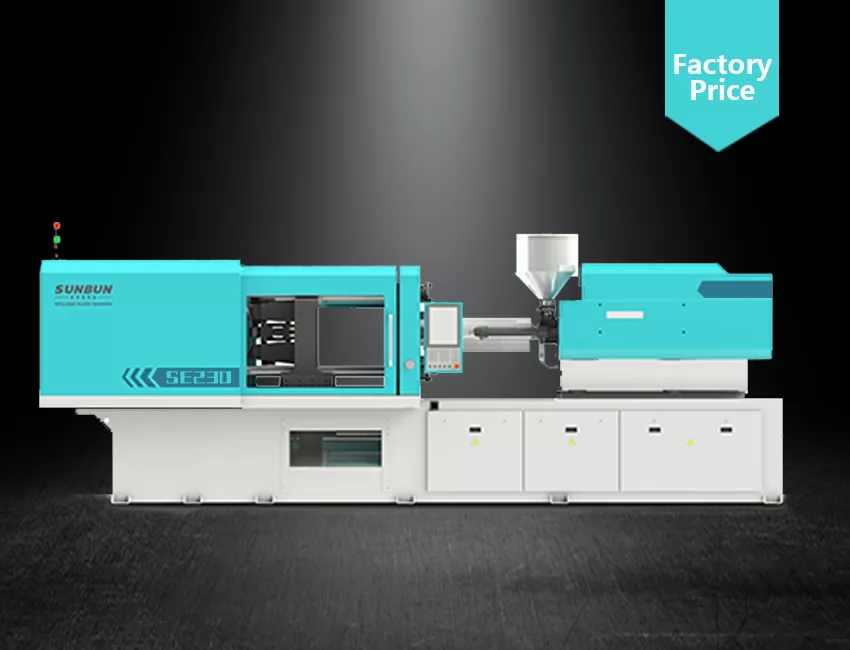
The high initial CAPEX is fundamentally driven by four interconnected factors relating to technology, scale, and market positioning. Understanding these drivers allows procurement teams to accurately benchmark quotes.
1. Clamping Force, Injection Capacity, and Physical Size
Tonnage is the most immediate factor influencing the price. As the clamping force increases, the cost escalates non-linearly due to increased material and component size requirements:
- Tonnage Scaling: Moving from a 100T machine to a 450T machine requires exponential increases in the axial load capacity of the main ball screw and the torque output of the clamping servo motor. This requires larger, more expensive, and more complex motor/drive packages.
- Physical Structure: Larger platens, thicker tie-bars (made from higher-grade steel), and a heavier machine base are required to maintain the required rigidity and minimize deflection under high load. The cost of these specialized steel castings and the precision machining time are major price additions.
- Injection Unit Capacity: Machines are typically priced by tonnage, but the injection unit's performance is crucial. A machine with a standard 40mm screw is cheaper than one optimized with a 50mm screw and a specialized high-flow nozzle, even if the clamping tonnage is identical. Specialized high-speed injection units (for thin-wall parts) require oversized servo motors and drives dedicated to the injection axis, adding a significant premium.
2. Core Component Cost: Motors, Drives, and Ball Screws
The cost of the electromechanical hardware is the primary differentiator between electric and hydraulic systems.
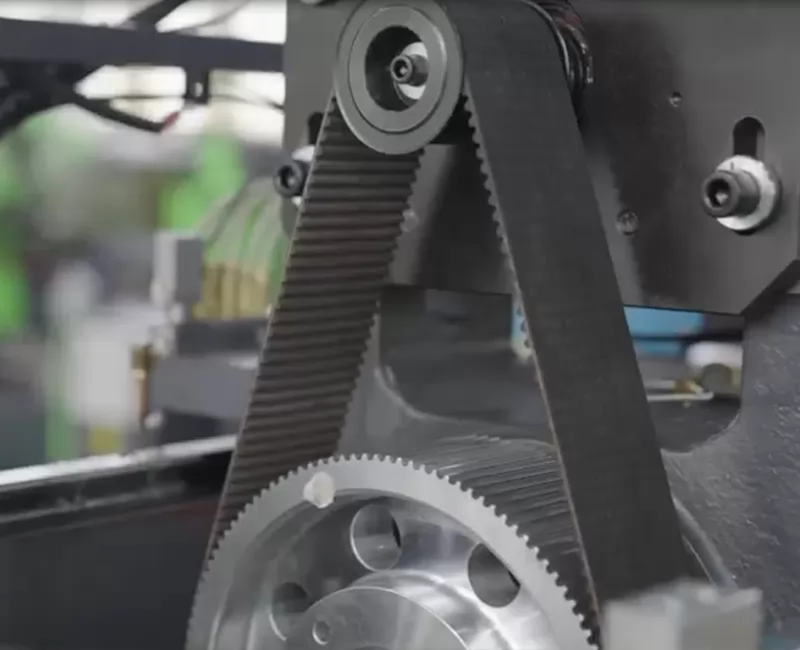
- Decentralized Power System: Unlike a hydraulic machine with one central pump, an all-electric unit has multiple dedicated, high-resolution servo motor/drive combinations (usually 4 to 5 sets). These motors (e.g., synchronous, high-pole rare-earth magnets) are highly specialized and costly compared to standard industrial motors.
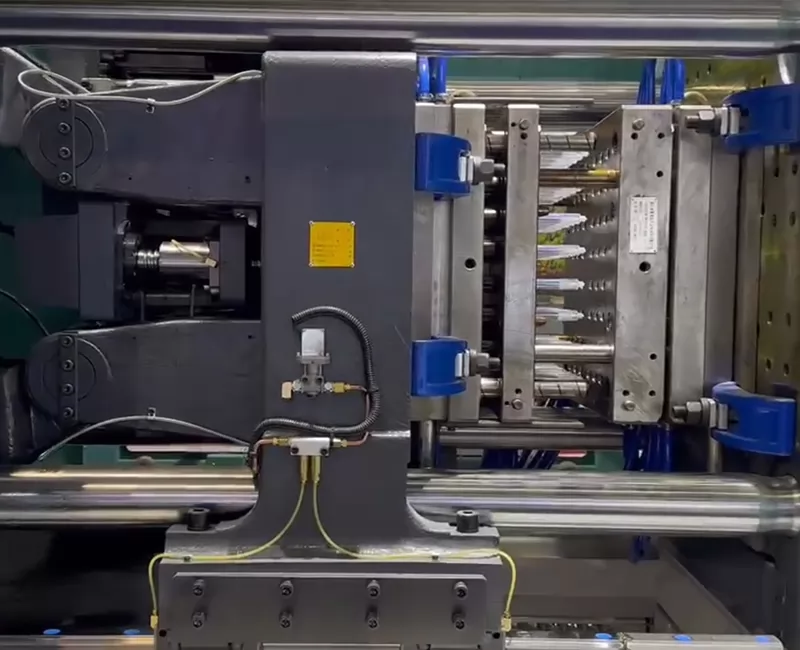
- Precision Ball Screw Technology: The injection and clamping ball screws must be precision-ground to P5/P3 tolerance grades. These are expensive, low-tolerance parts specifically designed to handle high static and dynamic axial loads while minimizing friction and thermal expansion. Their acquisition cost is vastly higher than simple hydraulic cylinders.
- Drive System Integration: The machine requires robust Variable Frequency Drives (VFDs) for each motor, plus sophisticated wiring harnesses and thermal management systems to handle the heat generated by the drives in the electrical cabinet, increasing the component count and assembly time.
3. Precision Grade and Control System Architecture
The grade of repeatability purchased dictates the tier of electronics required, directly affecting the price.
- Controller Tier: A machine capable of producing high-speed packaging requires a different (and more expensive) control system than one designed for standard electronics. High-end systems utilize powerful multi-core CPUs and real-time operating systems to manage complex, parallel movement profiles and integrate data via high-speed Fieldbus (e.g., EtherCAT).
- Encoder Resolution: Precision parts require high-resolution absolute encoders (18-bit or higher) on all axes to ensure sub-micron positional feedback. Lower-cost machines may use lower-resolution encoders, sacrificing repeatability for a lower price.
- Software and Feature Licensing: Advanced features such as predictive maintenance software, specialized process monitoring tools, and connectivity for Industry 4.0 (like OPC UA) often require additional software licensing fees, which are baked into the final price.
4. Brand Premium and Manufacturing Origin
The price of an electric machine is segmented significantly by the manufacturer's brand positioning and country of origin.
- Tier-1 Western/Japanese Brands: Brands like Fanuc, Sumitomo, and Engel command a premium due to decades of R&D, guaranteed global service networks, and historical reputation. Their price can be 50% to 100% higher than competitors, even when sourcing similar core components (e.g., motors).
- Value-Performance Brands (e.g., Sunbun): High-end Chinese manufacturers have closed the technology gap by using the same Tier-1 global components (e.g., KEB drives, Techmation controllers) but with lower labor and operational overhead. This results in a machine that offers comparable precision and performance but at a price point that offers a much faster Return on Investment (ROI).
Cost Breakdown: What Does Your Investment Cover?
The final quoted price (CAPEX) of an all-electric machine is a summation of three distinct financial components: the base machine, optional hardware and software customizations, and external costs like logistics and service fees.
A. Base Machine Capital Expenditure (CAPEX)
This covers the machine in its standard configuration, typically reflecting the core costs detailed in the previous section:
- Core Hardware: Frame, platens, tie-bars, standard barrel and screw assembly, and the primary electrical cabinet housing the servo drives and controllers.
- Standard Software: The machine's base operating software and safety features (e.g., E-stops, light curtains).
- Factory Acceptance Testing (FAT): Includes the manufacturer's internal quality control and functional testing before shipment.
B. Mandatory Customization and Auxiliaries
These are non-standard requirements that increase the complexity and price of the machine based on your specific application.
| Upgrade Type | Purpose | Est. Cost Increase Range |
|---|---|---|
| Specialized Plasticizing Unit | Handling abrasive materials (e.g., glass fiber) or corrosive materials (e.g., PVC), requiring bimetallic or specific alloy barrels/screws. | ~$5,000 - $15,000 |
| High-Speed/Accumulator Kit | Achieving ultra-fast injection speeds for thin-wall packaging. Requires specialized motors/drives or an optional accumulator unit. | ~$15,000 - $50,000+ |
| Cleanroom Preparation & Monitoring | Stainless steel surfaces, HEPA fan filters, closed-loop chilling systems, and specialized grease (mandatory for medical/optical parts). | ~$10,000 - $30,000 |
| Robotics & Automation Interface | Adding 3-axis or 6-axis servo robot arms, conveyor systems, and required software/hardware integration points. | ~$20,000 - $100,000+ |
C. Logistics, Installation, and Commissioning Fees
These costs occur post-purchase but must be accounted for in the total investment budget (CAPEX).
- Freight (FOB/CIF): The cost of shipping the machine from the factory to your facility. For large electric machines, this can be significant due to size and weight, easily adding $5,000 to $30,000 or more, depending on distance.
- Installation and Commissioning: Fees for factory technicians to travel to your site, supervise the machine setup, conduct final calibration checks, and perform Site Acceptance Testing (SAT).
- Training: Detailed operator and maintenance training provided by the manufacturer is crucial for maximizing efficiency and is often a separate service fee.
2025 All-Electric Machine Price Comparison & Market Segmentation
The all-electric market segment is highly differentiated, broadly categorized into high-premium brands and value-performance leaders. The following table provides estimated price ranges for new, high-quality all-electric injection molding machines based on tonnage (USD, EXW/FOB basis).
| Tonnage (Ton) | Sunbun SE-Series/Tier-1 Asian Brands (USD) | Premium Japanese/European Brands (USD) | Key Application Focus |
|---|---|---|---|
| 50T - 100T | $80,000 - $130,000 | $150,000 - $250,000 | Micro-precision electronics, small medical implants, high-cavitation thin-wall caps. |
| 130T - 200T | $140,000 - $210,000 | $280,000 - $400,000 | Optical lenses, technical closures, high-precision auto sensors (e.g., lidar). |
| 250T - 350T | $230,000 - $350,000 | $450,000 - $650,000 | Larger medical disposables, complex automotive interiors, appliance fascia. |
| 400T - 450T+ | $380,000 - $550,000 | $700,000 - $950,000+ | Specialized components requiring large mold dimensions (e.g., optical displays). |
The True Value Proposition: Beyond the Purchase Price
While the initial investment is high, the true justification for purchasing an all-electric machine lies in the subsequent operational savings and revenue generation potential, which define the Total Cost of Ownership (TCO).
- Unmatched Process Repeatability (Scrap Reduction): The core technical advantage lies in the direct, digital control over every process variable (speed, pressure, position). This leads to shot-to-shot consistency (e.g., 0.01mm repeatability) that minimizes variation in part weight and dimensions. For industries producing high-value, tight-tolerance parts, the resulting reduction in scrap material alone can rapidly justify the investment.
- Environmental and Health Compliance (The Cleanroom Mandate): The completely oil-free operation is mandatory for production environments requiring ISO Class 8 (or cleaner) air quality certifications. Beyond compliance, the dramatically reduced noise level (typically below 70 dB) creates a safer, more productive work environment for operators, reducing fatigue and error rates.
- Maximizing Output (Parallel Functionality): Electric machines exploit parallel axis movements. For example, the plasticizing unit can dose the next shot while the clamping unit is opening, and the ejector pin mechanism can run simultaneously with the clamping motion. This multi-tasking capability cuts unproductive dry cycle time by 20-40%, directly increasing parts per hour (PPH) without requiring a physically larger machine.
- Energy and Maintenance Efficiency (Lower OPEX): All-electric systems consume energy only when an axis is actively moving, resulting in 50-80% energy savings over standard hydraulic machines. Furthermore, the elimination of hydraulic oil, seals, and pumps significantly lowers maintenance time and material costs.
Conclusion: Calculating the True Investment
The question of "How much does an electric injection molding machine cost?" is complex, driven primarily by the required tonnage, the cost of specialized electromechanical components (motors, ball screws), and the necessary precision of the control system. While the initial CAPEX is higher, manufacturers must look past the sticker price to calculate the long-term ROI based on operational efficiencies.
By meticulously detailing the Base CAPEX, Customization costs, and Logistics fees, companies can secure the full budget. For those seeking premium performance and precision without the extreme cost of Tier-1 legacy brands, manufacturers like Sunbun offer globally competitive solutions (such as the SE-Series) that ensure a rapid and profitable return on a strategically sound investment in the future of digital manufacturing.
All-Electric Machine FAQs
Q1: Do all-electric machines have different lead times compared to hydraulic machines?
A1: Yes, often slightly longer. Due to the reliance on specialized global component suppliers (high-torque motors, specific ball screw diameters), lead times can be dictated by the availability of these high-demand parts. While assembly time is comparable, total lead time for an electric machine might be 1-2 months longer than for a standard hydraulic or servo-hydraulic machine.
Q2: What is "Regenerative Braking" and how does it relate to cost?
A2: Regenerative braking is a key feature of the servo drives. When the clamping unit or injection screw decelerates, the kinetic energy is converted back into electricity and fed into the machine's power grid (DC bus), rather than being wasted as heat. This process significantly contributes to the 50-80% energy savings seen in all-electric machines, directly impacting OPEX.
Q3: How does the higher precision of the electric machine affect mold maintenance costs?
A3: Counterintuitively, the higher precision *reduces* mold wear and maintenance costs. The precise, shock-free closing of the mold (often called "soft mold protection") prevents excessive wear on core pins and shut-off surfaces. The consistent pressure application also reduces stress spots, prolonging the life of expensive multi-cavity tooling.
Q4: Is the Sunbun SE-Series capable of multi-component or stack mold applications?
A4: Yes, the digital control architecture of all-electric machines is highly flexible. The SE-Series can be configured with auxiliary injection units (L-shape or vertical) for two-component (2K) molding, and the precision control makes it an excellent platform for managing the complex, often high-cavitation demands of stack molds.