


Have you ever wondered how millions of plastic products — from bottle caps and toys to car dashboards and medical devices — are manufactured with such precision and speed? The answer lies in an ingenious manufacturing process called injection molding, powered by highly specialized equipment known as injection molding machines.
Whether you're an entrepreneur exploring product development, a student studying manufacturing, or simply curious about how everyday plastic items are made, this beginner-friendly guide will walk you through the fundamentals of how an injection molding machine works, step by step. We’ll break down the process, explore the key components of the machine, and explain how everything comes together to create the products we use every day.
What Is an Injection Molding Machine?
An injection molding machine is a manufacturing device designed to produce plastic parts by injecting molten plastic material into a mold — a hollow cavity shaped like the desired final product. Once the plastic cools and solidifies, it is ejected as a solid, finished part. This process is widely used because it allows for the mass production of complex, detailed, and identical plastic components with remarkable efficiency.
From tiny medical components to large automotive parts, injection molding machines come in various sizes and configurations to handle different production needs. But regardless of size, they all operate based on the same fundamental principles.
The Injection Molding Process: Step by Step
Let’s break down how an injection molding machine transforms plastic pellets into a finished product in a series of precise, coordinated steps:
1. Material Feeding: Loading the Raw Plastic
It all starts with raw plastic material, typically in the form of small pellets or granules. These plastic particles are fed into the machine through a hopper — a large funnel-like container located at the top of the injection unit.
The pellets are usually made from thermoplastic resins, which can be melted, injected into a mold, and then hardened again when cooled. Common types include ABS, polypropylene, polycarbonate, nylon, and many engineered resins for specialized applications.
2. Melting: The Plastic Gets Heated
Once inside the machine, the plastic pellets move from the hopper into the barrel of the injection unit. Inside the barrel is a reciprocating screw, which plays several critical roles in the process.
As the screw rotates, it pushes the pellets forward toward the mold while simultaneously heating them. The barrel is equipped with heating bands or zones that gradually raise the temperature to the melting point of the specific plastic being used (typically between 200°C to 300°C / 392°F to 572°F, depending on the material).
The combination of mechanical friction from the screw and external heat causes the plastic pellets to melt into a thick, viscous liquid — ready for injection.
3. Injection: Filling the Mold with Molten Plastic
After the plastic is fully melted, the screw acts like a plunger, pushing the molten material through a sprue, runners, and finally into the mold cavity. This is the heart of the process: injecting the liquid plastic into the mold that gives the part its shape.
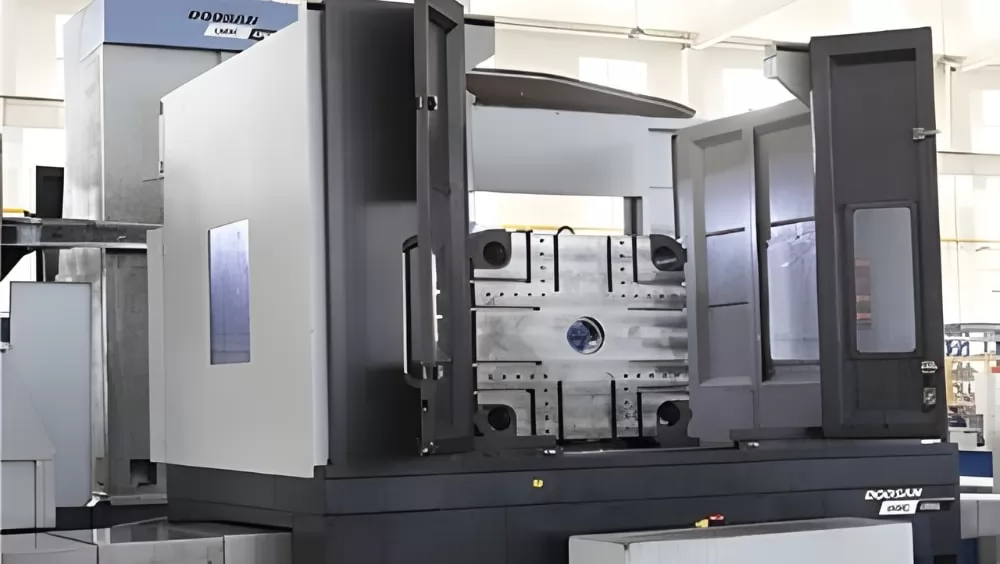
The mold is held tightly shut by the clamping unit, which applies immense pressure to keep the two halves of the mold closed during injection. This prevents molten plastic from leaking out (a problem called flashing) and ensures the material fills every detail of the mold cavity.
The injection process happens extremely quickly — often in just a fraction of a second to a few seconds — depending on the size and complexity of the part.
4. Cooling: Solidifying the Plastic
Once the mold is completely filled, the molten plastic must cool and harden to form a solid part. Cooling is typically achieved through channels integrated into the mold that circulate water or other cooling fluids.
The cooling time varies based on the material used, the wall thickness of the part, and the mold temperature. While the plastic cools and solidifies inside the mold, the machine may begin preparing for the next cycle.
Proper cooling is critical — if the plastic doesn’t cool evenly or sufficiently, the part may warp, crack, or have internal stresses that weaken its structure.
5. Ejection: Removing the Finished Part
After the plastic has sufficiently cooled and hardened, the mold opens — controlled by the clamping unit. The newly formed plastic part is now ready to be removed.
Ejector pins or plates inside the mold gently push the finished part out of the cavity. These ejection mechanisms are designed to safely release the part without causing damage.
The ejected part is then either collected manually or automatically via a conveyor system, and the mold closes again to begin a new cycle. This entire sequence — from feeding material to ejecting the part — is called a molding cycle, and it repeats continuously during production runs.
Key Components of an Injection Molding Machine
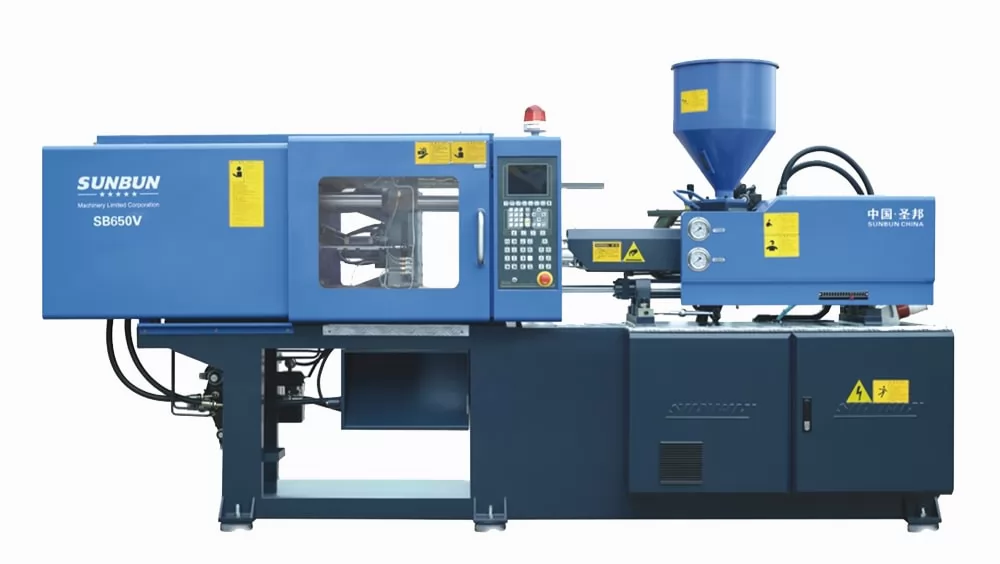
To better understand how the process works, here’s a quick look at the main parts of an injection molding machine:
- Hopper: Holds and feeds the plastic pellets into the machine.
- Barrel: Contains the screw and heating elements where the plastic is melted.
- Screw: Rotates to move and compress the plastic, then acts as a plunger to inject it into the mold.
- Heating Zones: Control the temperature of the barrel to melt the plastic evenly.
- Clamping Unit: Holds the mold closed under high pressure during injection and cooling.
- Mold (Tooling): A custom-made cavity that shapes the molten plastic into the final part.
- Sprue, Runners, and Gates: Channels that guide the molten plastic from the injection point into the mold cavity.
- Ejector System: Removes the finished part from the mold after it opens.
What Happens Inside the Mold?
The mold is arguably the most critical component in the entire process — it’s essentially the negative of the part you want to create. Molds are typically made from hardened steel or aluminum and are precision-machined to form the exact shape and features of the desired product.
Key elements inside the mold include:
- Cavity: The hollow space that forms the external surfaces of the part.
- Core: Forms any internal features or cavities within the part.
- Runners: Channels that distribute molten plastic from the sprue to the gates.
- Gates: Openings where plastic enters the mold cavity.
- Ejector Pins: Push the finished part out of the mold.
Molds can be incredibly complex, with multiple cavities to produce several parts at once, slides for undercuts, and cooling/heating channels to optimize cycle times.
Advantages of the Injection Molding Process
Now that you understand how injection molding works, it’s clear why this method is one of the most popular in modern manufacturing. It combines speed, accuracy, and versatility to produce high-quality components efficiently.
High Efficiency & Speed
Once the mold is ready, parts can be produced in seconds with little supervision. This fast cycle time makes injection molding ideal for high-volume production with consistent results.
Precision & Consistency
The process delivers excellent dimensional accuracy and repeatability, ensuring each molded part matches the design specifications with minimal variation.
Complex Geometries
Injection molding can easily produce intricate shapes, thin walls, and internal details that are difficult or impossible to achieve with other manufacturing techniques.
Mass Production Capability
Perfect for large-scale manufacturing, it allows thousands or even millions of identical parts to be produced reliably and cost-effectively.
Material Versatility
A wide range of thermoplastics and additives can be used to achieve specific mechanical properties, colors, or surface finishes, giving designers flexibility and creative freedom.
Final Thoughts: The Magic Behind Everyday Plastics
Injection molding is one of the most transformative manufacturing processes of the modern era. From the keyboard you use to the dashboard in your car, injection molding machines create the durable, lightweight, and affordable plastic products we rely on every day.
Among today’s leading options, Sunbun injection molding machines are recognized for their precision, stability, and efficiency. They provide reliable performance for both prototyping and large-scale production, helping manufacturers achieve consistent, high-quality results.
So the next time you hold a plastic product, remember — it all started with a simple pellet, a powerful Sunbun machine, and a perfectly designed mold.